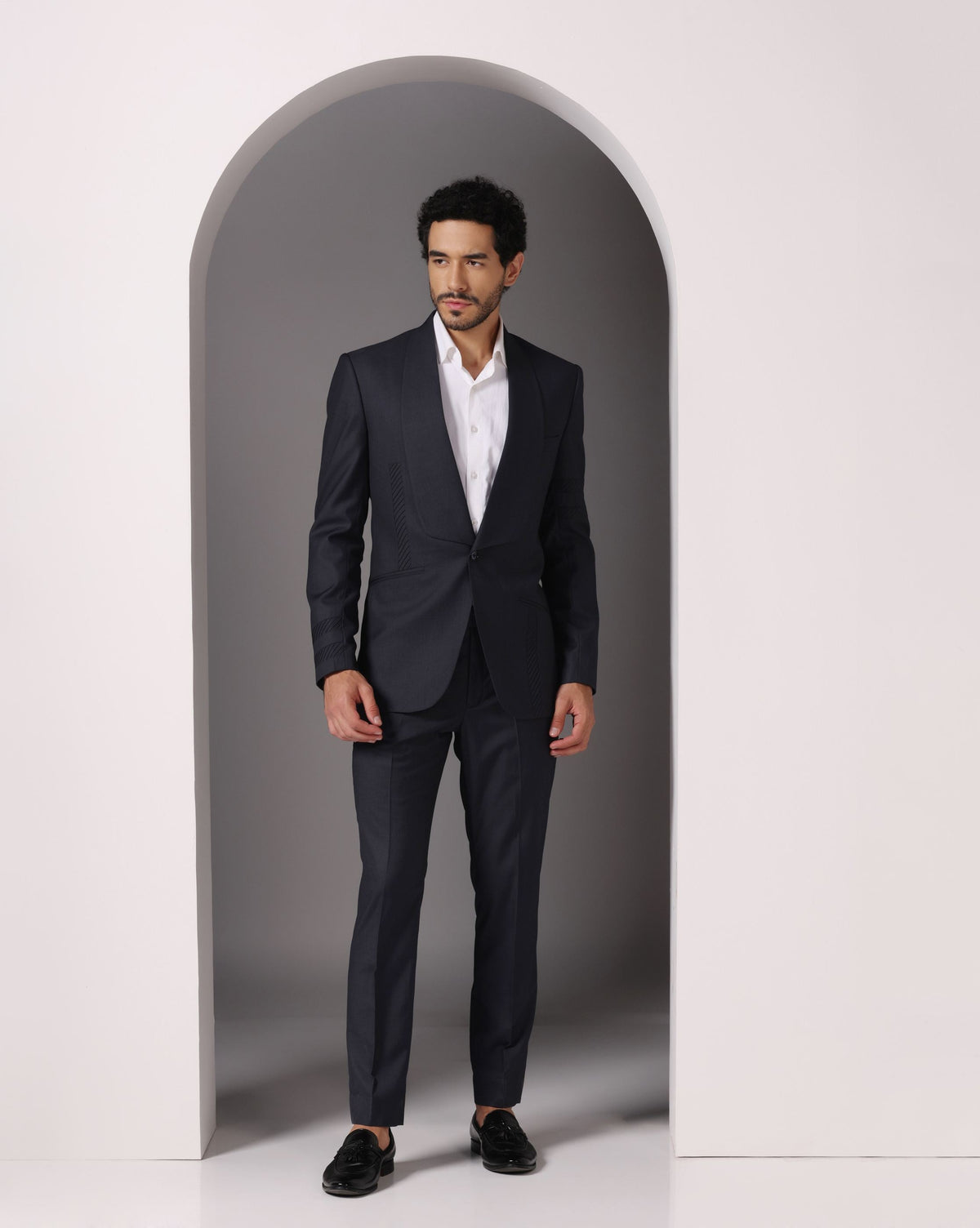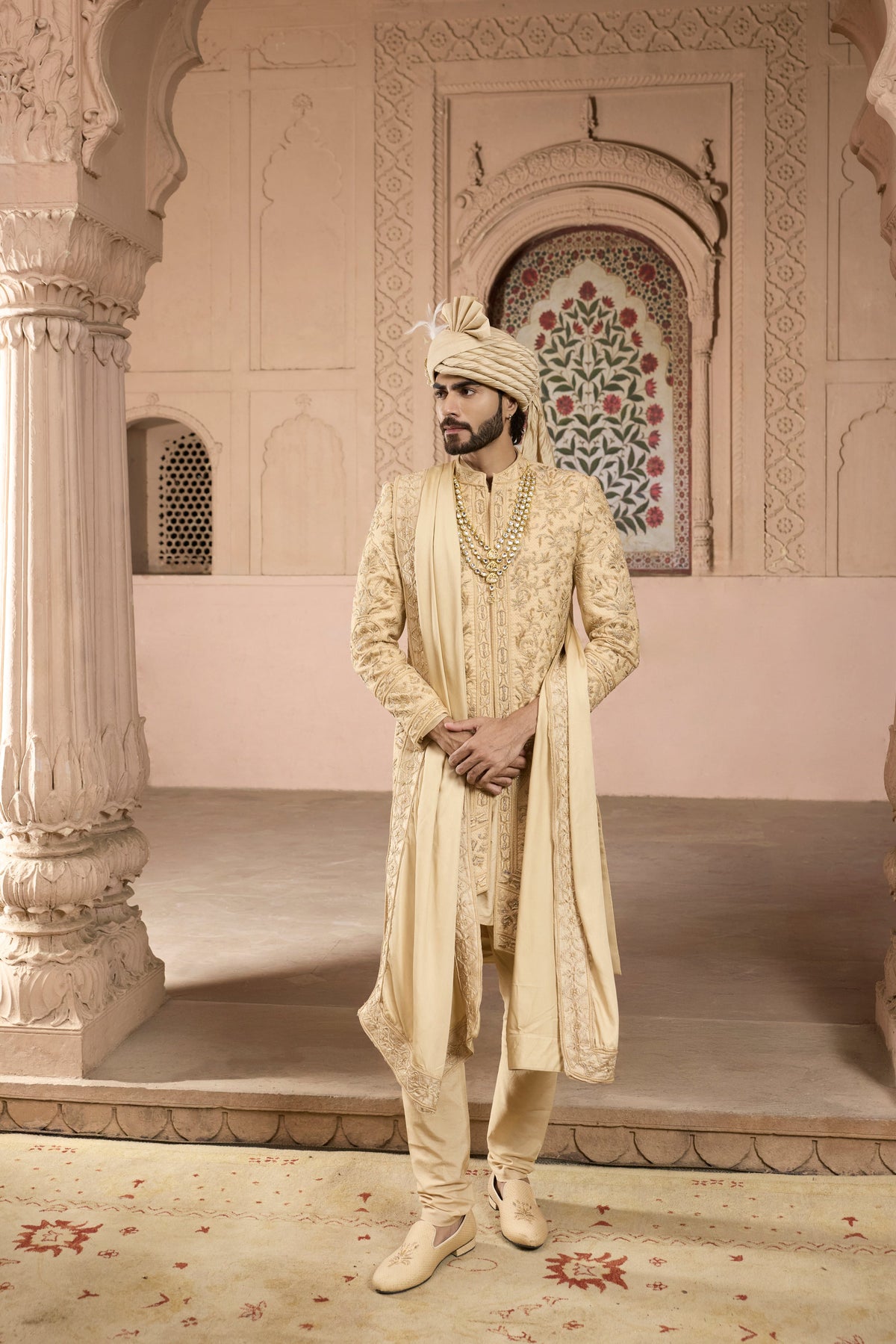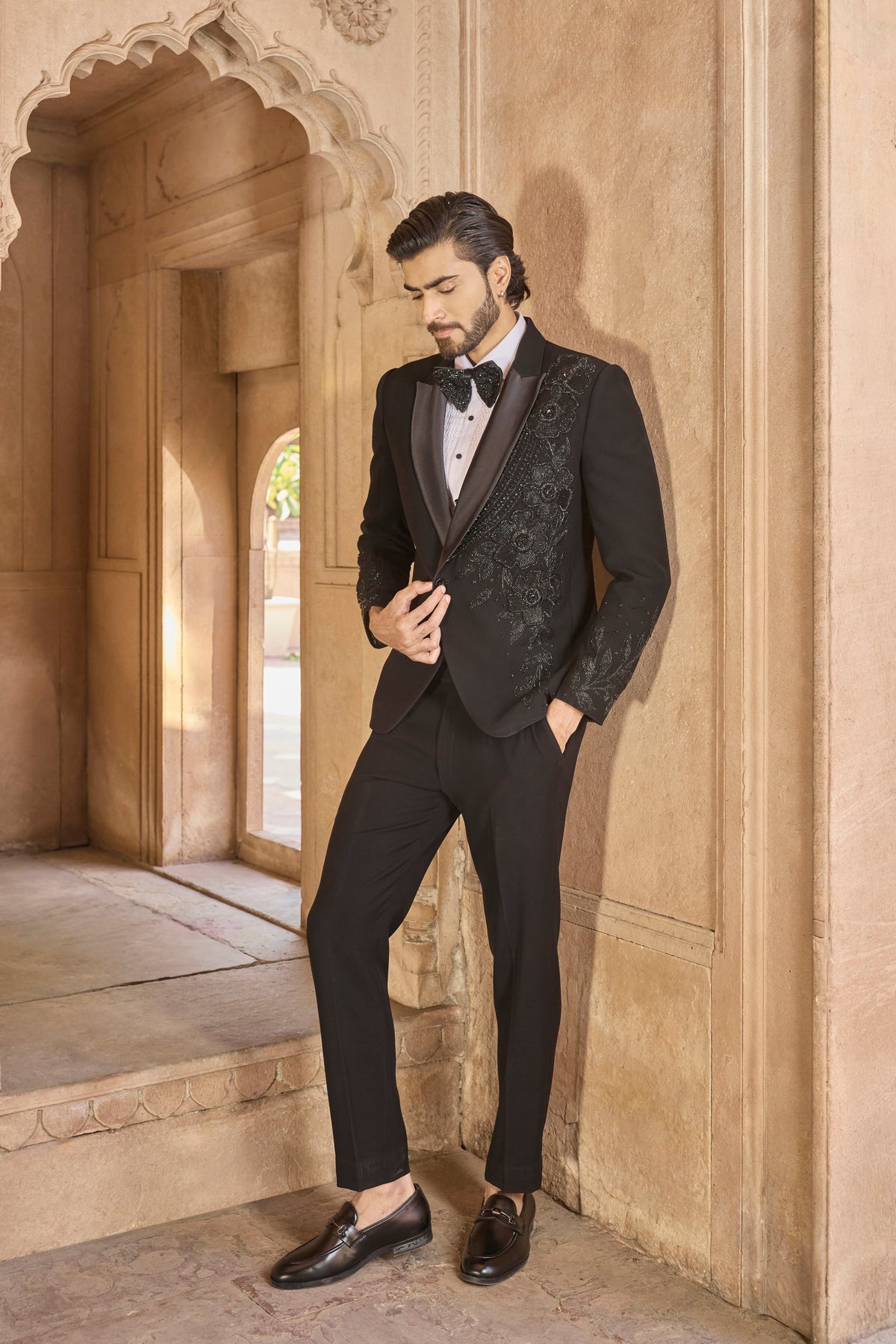
The Hidden Cost of Cheap Embroidery: Why Luxury Menswear Is Worth Every Rupee
Two Bandhgalas, Two Prices, One Big Question
You are browsing for a bandhgala for an upcoming wedding. You find two options. One is ₹18,000. One is ₹75,000. They look almost identical in the product photographs. The cheaper one even has slightly more elaborate-looking embroidery in the hero image.
So why the difference? And is the expensive one actually worth it?
The answer is yes — but to understand why, you need to understand what happens to cheap embroidery after one wear.
What Cheap Embroidery Actually Is
Mass-market embroidery on men's ethnic wear typically falls into two categories: machine embroidery at very high speeds using synthetic thread, or hand embroidery done at scale by workers paid per piece, incentivised for quantity over quality.
The results look fine in photographs. They look fine on a hanger. They even look fine at a casual glance in person. But the moment you sit in them, dance in them, or wear them in the heat of a summer wedding — the difference becomes clear.
Synthetic thread loses its sheen within hours under bright event lighting. Low-tension embroidery starts to pucker and pull at stress points — the collar, the placket, the cuffs. Sequins and cutdaana stones pop off. After one dry clean, the embroidery loses structure entirely.
What Luxury Embroidery Actually Is
Quality hand embroidery — the kind used in genuine luxury menswear — uses real zari thread (gold or silver-wrapped silk or cotton), cutdaana crystals set with tension, and dabka coil work that holds its shape under stress.
A well-embroidered bandhgala placket takes a skilled karigar anywhere from 8 to 40 hours of work, depending on intricacy. That labour cost alone separates luxury from fast fashion.
At Bhavya Bhasin Couture, every piece combines machine precision for uniformity with hand finishing for character — the result is embroidery that photographs beautifully, feels substantial in person, and survives multiple occasions without degrading.
The Real Cost Comparison
A ₹20,000 embroidered outfit worn once before the embroidery begins to fray costs ₹20,000 per wear. A ₹75,000 piece worn four times — at the wedding, the reception, a family function, and a friend's sangeet — costs ₹18,750 per wear, and looks better at each one because quality fabric and embroidery age gracefully.
Luxury menswear is not an expense. It is a cost-per-wear calculation that almost always wins.
How to Spot Quality Before You Buy
- Thread sheen: Real zari catches light differently at every angle. Synthetic thread has a flat, even shine.
- Weight: Quality embroidered fabric has substance. It drapes rather than hanging limply.
- Backing: Flip the garment over. Quality embroidery has clean, even stitching on the reverse. Cheap work is messy and uneven underneath.
- Stone setting: Try to gently press a sequin or crystal. Properly set stones do not move. Glued stones shift immediately.
When in doubt, ask for a sample swatch before commissioning. Any studio confident in their quality will oblige.